
Skincare
Why SPF 50+ Sunscreen Is Non-Negotiable Every Day
Ask any dermatologist what the single most important skincare product is, and the answer is almost always the same: sunscreen. Not a vitamin C serum. Not a retinol cream. Not a hyaluronic acid treatment. Sunscreen.
Yet it's the step that most people skip — especially on cloudy days, or days spent mostly indoors. Here's why that's a mistake, and why SPF 50+ protection deserves a permanent place in your daily routine.
The Sun Is the Number One Cause of Skin Aging
Up to 90% of visible skin aging — fine lines, wrinkles, dark spots, uneven texture, loss of firmness — is caused not by time, but by UV exposure. This is called photoaging, and it accumulates silently over years and decades.
The damage doesn't just happen on beach days. It happens every time you walk to your car, sit near a window, or step outside for a few minutes. UV rays are present year-round, even on overcast days, and UVA rays (the ones responsible for aging) can penetrate glass.
The most effective anti-aging step you can take isn't a $200 serum. It's a daily SPF 50+ sunscreen.
UVA vs. UVB: Understanding the Difference
There are two types of UV rays that affect the skin:
UVA rays penetrate deep into the dermis — the layer where collagen and elastin live. They cause long-term damage that shows up as wrinkles, sagging, and dark spots. UVA rays are present at consistent levels throughout the day, all year round, and can pass through clouds and glass.
UVB rays are the ones responsible for sunburn. They're stronger in summer and at higher altitudes, and they play a key role in the development of skin cancer.
A broad-spectrum sunscreen protects against both. This is why "broad-spectrum" on the label matters — not just the SPF number.
Why SPF 50+ Specifically?
SPF (Sun Protection Factor) measures how much UVB radiation a sunscreen blocks:
- SPF 30 blocks approximately 97% of UVB rays
- SPF 50 blocks approximately 98% of UVB rays
- SPF 100 blocks approximately 99% of UVB rays
The difference between SPF 30 and SPF 50 might sound small, but for daily use — especially if you spend time outdoors, sit near windows, or have skin that's prone to hyperpigmentation — that extra protection adds up significantly over time.
SPF 50+ is the standard recommended by most dermatologists for daily facial use.
"But I'm Indoors Most of the Day"
This is one of the most common reasons people skip sunscreen — and one of the most misunderstood.
UVA rays, which cause aging, penetrate glass. If you sit near a window at home or in an office, you're receiving UVA exposure. If you drive, you're receiving UVA exposure through the windshield and side windows.
Studies have shown that the left side of the face (the driver's side) tends to show more signs of aging in people who drive regularly — a direct result of UVA exposure through the car window.
Sunscreen every morning, regardless of your plans for the day, is the only reliable way to protect against this.
How to Choose a Sunscreen You'll Actually Wear
The best sunscreen is the one you'll use consistently. For daily facial use, look for:
- Broad-spectrum protection — covers both UVA and UVB
- SPF 50 or higher — for reliable daily protection
- Lightweight, non-greasy formula — so it sits comfortably under makeup
- No white cast — especially important for medium to deeper skin tones
- Hydrating ingredients — like Hyaluronic Acid or Vitamin E, which support the skin barrier
A sunscreen that feels heavy, greasy, or leaves a white cast is one you'll find excuses not to wear. A lightweight, skin-friendly formula removes that barrier.
How to Apply Sunscreen Correctly
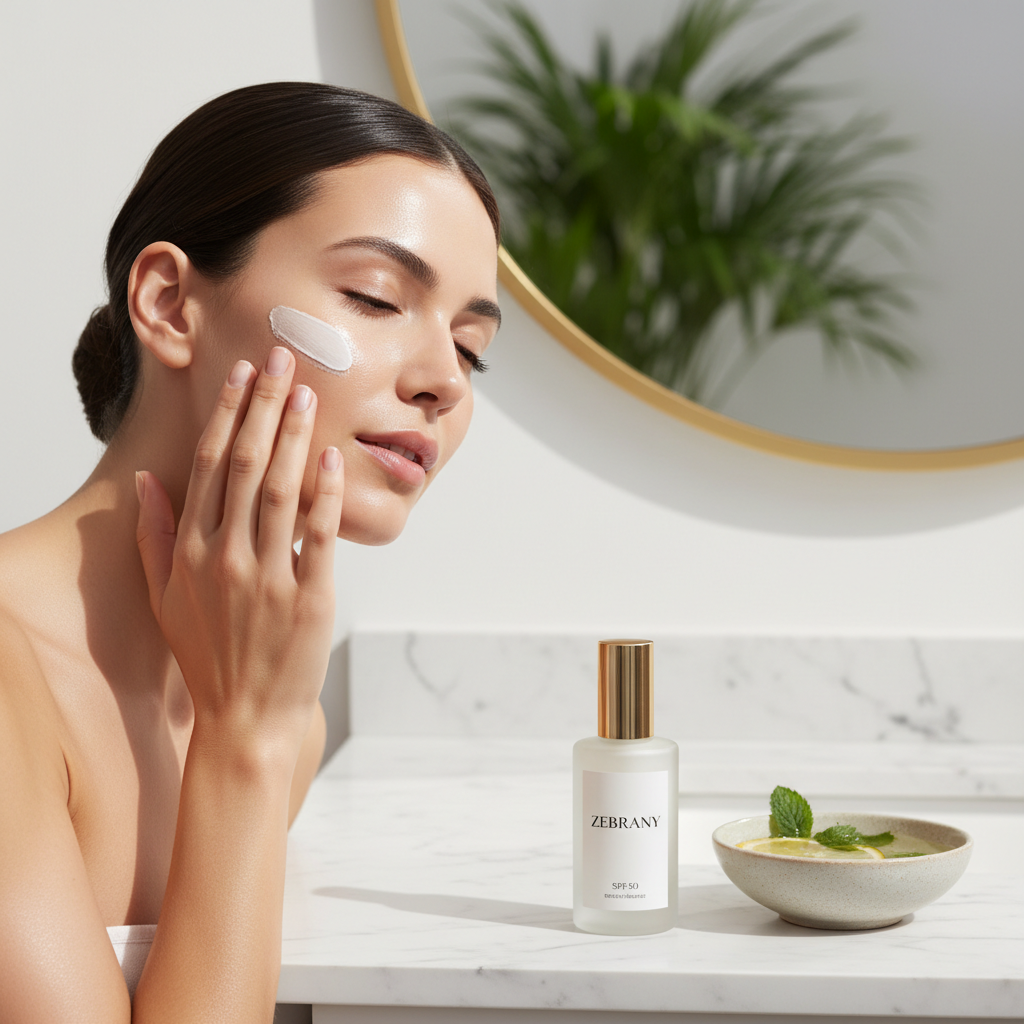
Most people don't apply enough sunscreen to get the full SPF protection listed on the label. For the face and neck, you need approximately a teaspoon (about a nickel-sized amount) for adequate coverage.
Apply it as the last step in your morning skincare routine, after moisturizer and before makeup. Reapply every two hours if you're spending time outdoors.
Sunscreen and Your Other Skincare Products
If you're using active ingredients like retinol, AHAs, or Vitamin C, sunscreen becomes even more important. These ingredients can increase your skin's sensitivity to UV rays, making protection more critical — not less.
Think of sunscreen as the step that protects all the work your other skincare products are doing. Without it, you're undoing the benefits of everything else in your routine.
The Bottom Line
No skincare routine is complete without daily sun protection. SPF 50+ sunscreen is the most evidence-backed, dermatologist-recommended step you can take for long-term skin health — and it's one of the simplest.
The Zebrany Facial Sunscreen SPF 50+ is formulated to be lightweight, non-greasy, and comfortable under makeup, with Hyaluronic Acid and Vitamin E to support hydration alongside protection. Make it the last step in your morning routine — every single day.